Monday, 2 December 2013

Energy and eco-handouts funded by tax avoidance crackdown, says Osborne

Moves to cut energy bills by £50 and energy efficiency grants of £1,000 for homebuyers to come in autumn statement
A fresh crackdown on tax avoidance will fund £1,000 grants for homebuyers to improve energy efficiency, George Osborne has said.
The chancellor said the coalition would keep the public finances under tight control as he gave details of a shake-up of green levies that could see £50 shaved off energy bills.
He said on the BBC's Andrew Marr Show that his autumn statement on Thursday would stick to the task of delivering a "responsible recovery". Despite signs of a sharp upturn in growth, he said there were still "lots of risks" for the economy and increasing borrowing would be "disastrous".
Asked how the energy efficiency grants and cuts to environmental levies on bills would be funded, Osborne replied: "The money will come from additional taxes that we will raise from dealing with tax avoidance."
Danny Alexander, the chief secretary to the Treasury, said he hoped the coalition's proposal would persuade Labour to drop its "barmy idea to con the public" with a 20-month energy bill freeze should it win the 2015 general election.
He said the new measures paid for by "tax dodgers" would also "not sacrifice a single gram of carbon" that the coalition was already aiming to save.
Speaking on Pienaar's Politics on BBC Radio 5 Live, Alexander said: "We are just doing it differently. So, rather than saying that billpayers should pay all these costs for other people to insulate their homes, we're saying instead that tax dodgers should pay that because we're going to use the taxpayer to pick up some of those costs and use that money to give people extra financial incentives.
"So, if you like, we're helping to take money off people's bills through the energy companies and we're paying people to take action to cut their own bills further."
But the shadow chancellor, Ed Balls, claimed the coalition's new energy announcement would not last 24 hours, and said the lack of answers from Nick Clegg and David Cameron made them look "a bit naked today".
He told 5 Live: "I think by Thursday George Osborne will have to come up with something more but this is not going to be good enough."
Balls added: "What's happened today is David Cameron and Nick Clegg, in a rather bizarre joint article in the Sun, have decided they're going to try and engage Ed Miliband on Labour's territory – pointing out the cost of living crisis, the failure of action on energy prices, the fact that most people are worse off not better off compared to 2010.
"But they've raised the issue and they've not got an answer and therefore … I think David Cameron and Nick Clegg both look together a bit naked today."
To laughter, Balls added: "That was not intended to be more than a metaphor."
As part of the package of changes to green levies, the energy company obligation (ECO) scheme will be halved by giving the big six power firms two years longer to hit targets. Other policy charges will be funded from general taxation in future.
EDF welcomed the move – expected to trim average bills by £50 a year – and indicated that it was not now likely to hike prices again before 2015.
In addition, anyone buying a home will be eligible for the £1,000 grant for energy efficiency measures, such as installing insulation or replacing the boiler. The sum could be even higher if the property needs a great deal of work.
Osborne dismissed the idea that energy companies would pocket the reduction in government levies without bringing down bills. "We are absolutely insistent that this is passed on … I am pretty clear with you that it is going to happen," he said.
He refused to give details of the tax avoidance crackdown but said people were wrong to be sceptical about whether such action really raised revenue. "This government has taken step after step and the amount of tax we collect from people who were previously avoiding their tax goes up by billions of pounds over this parliament," he said.
The chancellor attacked Labour's energy price freeze pledge, which has been dominating the political agenda since Miliband announced it in September.
"We are doing it in the way that government can do it, which is controlling the costs that families incur because of government policies," he said. "We are also doing it in the way that is not going to damage the environment or in any way reduce our commitment to dealing with climate change."
He went on: "It is all about providing people with carrots not sticks and I think that is the right way for this country to go green. By taking these additional measures we can afford to help the vast majority of people who do pay their taxes, have expensive electricity and gas bills and therefore want to have relief from the government."
Article Source : http://www.guardian.co.uk
Azure Global’s vision is to be widely recognized as a reputed firm of financial business advisors, achieving real growth for ambitious companies and to become the first choice for F&A outsourcing for accountancy practices and businesses alike and if u want to Setup ur business in United Kingdom then  its not difficult in this modern age for more info visit our site Azure Global and join us also On Facebook

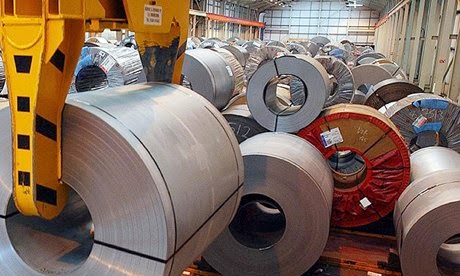
UK manufacturing sector to grow faster than economy next year

Industry report gives buoyant forecast for UK manufacturing, predicting 2.7% growth compared with 2.4% for economy
Manufacturing will grow faster than the overall UK economy next year but much-needed business from overseas markets is looking shakier, according to an industry report published on Monday.
The buoyant forecast from UK manufacturers' organisation EEF marks a turnaround for a sector the government has repeatedly championed as an engine for growth, but which has struggled to emerge from recession.
News that orders and output are now rising and that UK factories plan to ramp up hiring and investment will be welcomed by George Osborne as he prepares to outline his latest plans to boost the recovery in his autumn statement this week.
But EEF's latest survey with accountants BDO showed exports were weaker than expected in recent months on the back of slower growth from some emerging markets and sluggishness in the eurozone, the UK's most important market.
EEF chief economist Lee Hopley said: "Over the course of the year we have seen a definite turnaround in prospects for manufacturing and this looks set to continue into next year. This increased confidence is evident in companies looking to increase their headcount and, most importantly for balanced growth, step up their investment.
"However, uncertainties in the global economy remain and a sustained recovery is not secure. As a result, growth must remain a priority for government over the remainder of this parliament, starting with the autumn statement this week."
The group, which has 6,000 member companies, says the risk comes from an uncertain export outlook. But it still thinks the sector will grow by 2.7% in 2014 compared with 2.4% for the economy overall. EEF thinks that this year the manufacturing sector will have contracted 0.1% while the wider economy grows 1.4%.
While that still puts that manufacturing sector in recession this year, the prediction marks a significant upgrade from the last estimate of a 0.5% decline. The group said that reflected a run of improving news. Its own quarterly survey showed a majority of firms reporting growth in both output and orders, though these measures slipped back from highs seen over the summer. Within the sector, the strongest results came from motor vehicle and electronics companies.
A separate report on Monday echoes recent optimism about new jobs being created by the private sector. Business lobby group the CBI says medium-sized businesses are helping to drive the recovery but that the government must do more to help them access finance, find skilled workers and get support to export.
Despite accounting for less than 2% of the private sector, medium-sized businesses have created jobs at twice the pace of large companies, the CBI said. They added 185,000 jobs between March 2010 and March 2013, a rise of 4.1%, and now employ 16% of the UK's total workforce.
Medium-sized firms, classed as having 50-499 staff and a turnover of £10m-£100m, have also grown their turnover by 7% – more than double that of smaller firms and large companies. They now contribute more than £300bn to the economy, but the lobby group says government support could boost that significantly.
"This hugely positive picture is reflected up and down the country where medium-sized businesses are major local employers, in many cases helping to offset public sector job losses during the downturn," said CBI director general John Cridland.
"With better access to a range of growth finance options, improved training and research support, and help to break into new export markets – these firms could be worth an extra £20bn to our economy by 2020."
Article Source : http://www.guardian.co.uk
Azure Global’s vision is to be widely recognized as a reputed firm of financial business advisors, achieving real growth for ambitious companies and to become the first choice for F&A outsourcing for accountancy practices and businesses alike and if u want to Setup ur business in United Kingdom then  its not difficult in this modern age for more info visit our site Azure Global and join us also On Facebook
Friday, 29 November 2013

Tesco accused of squeezing suppliers to support its profits

Britain's biggest supermarket alleged to have written letters demanding money from suppliers' trading accounts
Tesco has been accused of squeezing suppliers to support its profits ahead of an anticipated grim trading update next week.
Mike Dennis, an analyst at stockbroker Cantor Fitzgerald, suggested that Britain's biggest supermarket had written letters demanding money from suppliers' trading accounts – where payments are deposited by Tesco – to support its short-term profit margins.
He said that such activity risked breaching the groceries supply code of practice, which governs dealing between big supermarkets and their direct suppliers.
He said: "It is our view that Tesco has again overstepped the mark and the situation is very difficult for many suppliers."
Tesco said Dennis's assertions were "based on speculation" and it had not broken the code. But it did not specifically deny the allegation that it had recently demanded or taken money from suppliers.
A spokesman said: "In our interim results presentation last month, we set out how the general merchandise transformation programme will be a drag on our sales growth but beneficial to the overall UK margin, helping to offset some of the other investments we are making for customers."
The office of the groceries code adjudicator, Christine Tacon, said she had not received any complaints about Tesco demanding cash from suppliers but would be looking into the accusations.
A spokesperson said: "Where we do hear reports about possible issues surrounding the code, we will look to follow up with the retailers concerned.
"It's obviously too early to conclude whether there has been any breach but we will want to find out more about the circumstances."
Tacon is consulting on the guidance for investigations and enforcement of the code, which may involve fines of up to £1bn for serious breaches. She is expected to publish her recommendations before Christmas and formal investigation can take place before then.
There was no suggestion that Tesco could or should face such an investigation, with probes only expected to be launched in extreme circumstances.
Several retail analysts said that Tesco could use a number of different strategies to meet its promise of maintaining UK profit margins despite an expected 1.5% or 2% fall in underlying sales during the three months to the end of November.
For example, the supermarket has been gradually reducing its sales of less profitable electrical items such as televisions and been heavily promoting more profitable lines such as its premium own-label Finest food range.
Andrew Kasoulis, an analyst at Credit Suisse, said: "Price cuts and negative sales volumes do, of course, weigh on margin, but improving fresh [food] sales, the Finest re-launch, more convenience stores, downsizing non-food, successful refits and less money-off coupons this year are all positive for margin."
He said Tesco's anticipated 5.2% UK margin target for this year could be the result of multiple factors and not necessarily the result of putting pressure on suppliers.
Tesco's management team are under pressure as its underlying sales fall around the world. In Britain it is losing business to upmarket rivals such as Waitrose and hard discounters like Aldi and Lidl.
It is also struggling with the move away from big weekly shopping trips at hypermarkets and a shift to online shopping.
Article Source : http://www.guardian.co.uk
Azure Global’s vision is to be widely recognized as a reputed firm of financial business advisors, achieving real growth for ambitious companies and to become the first choice for F&A outsourcing for accountancy practices and businesses alike and if u want to Setup ur business in United Kingdom then  its not difficult in this modern age for more info visit our site Azure Global and join us also On Facebook

Hedge fund sells up after forcing Co-op to cede control of bank

Aurelius sells bonds at profit before crucial vote
Co-op bank admits it is losing current accounts

One of the US hedge funds which forced the Co-operative Group to cede control of its troubled bank has sold its investment ahead of a crucial vote on a rescue £1.5bn fundraising.
Just hours after the Co-operative Bank admitted it was losing current accounts because of concerns over its future as an ethical institution amid the intervention of hedge funds and the scandal over former chairman Paul Flowers, it emerged that the US hedge fund Aurelius had sold its position in the bank's bonds.
Aurelius – best known for forcing Argentina to pay out on its debts – had bought up Co-op bonds as they collapsed in value following the downgrade of the bank to junk status in May. Since then the bonds have risen in value and have now been sold on to another hedge fund, London-based Perry Capital. Perry pledged to continue backing the crucial restructuring of the bank just hours before Friday's deadline to vote on the deal.
The so-called LT2 group of hedge funds, which included Aurelius and has forced the changes on the Co-op Group, made no reference to the crucial change in its membership when it reiterated its support for the restructuring on Thursday morning. If bondholders vote to back the restructuring of the bank, the wider Co-op Group, which includes supermarkets and funeral homes, will end up with just a 30% stake in the bank that bears its name. The deadline for votes is 4.30pm on Friday.
The Co-op, in an unscheduled announcement outlining technical changes to the terms offered to LT2, insisted that its savers – whom it relies on to finance its business – were not moving their cash out of the bank and its deposit base remained stable.
Flowers is on bail until January after being arrested following a Mail on Sunday report that showed a video of the 63-year-old Methodist minister handing over cash to apparently buy drugs. Even before Flowers' arrest there was concern that the intervention of hedge funds in the Co-op fundraising could make it difficult for the bank to maintain its ethical stance.
"These recent events, together with the competitive landscape in which the bank operates, the introduction of seven-day account switching and the associated increased competitor marketing activity at a time when the bank has been constrained in its ability to undertake its own marketing activity, may be a contributing factor to an increase the bank has seen in the switching out of current accounts," Co-op said.
The wording is tougher than that in the prospectus sent to bondholders on 4 November to back the restructuring when it referred to a "material reduction" in the number of people moving their accounts to the bank since the seven-day switching service was introduced in September. At that time it said corporate customers had taken away £1.4bn worth of deposits since the ratings downgrade in May.
The admission by the Co-op bank came as its regulator, Andrew Bailey, chief executive of the Prudential Regulation Authority, said the regulatory approval granted to enable Flowers to become chairman in 2010 was "before his time".
Bailey, who took over the top regulation job in the summer of 2011, said he had required the Co-op bank board to be strengthened and had set out hurdles for the bank to meet if it was to be granted approval for the takeover of 631 branches from Lloyds Banking Group. That deal, called Verde, collapsed this year.
Bailey insisted he did not "know the whole story" about what had happened or about any potential intervention from politicians keen to see the Co-op take over the Lloyds' branches. He added: "The real important thing today is not to deal with Reverend Flowers's antics but to deal with stabilisation and restructuring of the bank."
Lord Myners, City minister during the 2008 banking crisis, called for institutional investors to be represented when bank directors are appointed. "We need a fundamental change in accountability and alignment within the board room. Shareholders had got off scot-free when it came to culpability for bank failures and the cost to the economy," Myners said.

Lloyds looks to lord

The Conservative peer Lord Blackwell is the leading candidate to become the next chairman of the bailed-out Lloyds Banking Group.
The former head of Sir John Major's policy unit, and a serial non-executive director, already has a seat on the bank's board and chairs its insurance arm Scottish Widows. He previously sat on the board of Standard Life and retailers Dixons and was once a partner at the management consultants McKinsey.
The bank, whose chief executive, António Horta-Osório, received a £2.3m bonus last week because of the rally in its shares, has been seeking a successor to Sir Win Bischoff who wants to retire at next year's annual meeting.
The government began to sell its stake in Lloyds in September and now owns a 32% shareholding, which is expected to fall further before the general election through a sell-off to retail investors.
Lloyds would not comment on its next chairman on Thursday.
Article Source : http://www.guardian.co.uk
Azure Global’s vision is to be widely recognized as a reputed firm of financial business advisors, achieving real growth for ambitious companies and to become the first choice for F&A outsourcing for accountancy practices and businesses alike and if u want to Setup ur business in United Kingdom then  its not difficult in this modern age for more info visit our site Azure Global and join us also On Facebook

Thursday, 28 November 2013

Royal Mail major shareholders to be asked if shares were too cheap

Commons business committee plans to write to large investors as part of bid to find out if state-owned postal service was undervalued
Royal Mail investors who bought large stakes in the postal service following its £3.3bn privatisation last month are to be asked by MPs why they have staked hundreds of millions of pounds on the view that the government sold the firm on the cheap.
The news emerged after the Commons business committee investigating the Royal Mail flotation questioned the business secretary, Vince Cable, and his ministerial colleague Michael Fallon how the offer was valued, prompting an assertion from Cable that there was no need for an independent inquiry into the process.
Committee chairman Adrian Bailey said he will be writing to the The Children's Investment Fund (TCI) and GIC, Singapore's sovereign wealth fund, which have built up their Royal Mail stakes since its listing to more than 6% and 4%, respectively – having decided the shares would rise far above their 330p flotation price.
He said: "Yes, we might well want to [write to major new shareholders to ask why they value Royal Mail so highly]. We are reviewing the transcript [of evidence] to identify areas to follow up."
The committee has been investigating whether the taxpayer has been shortchanged by the Royal Mail flotation, in which 60% of the shares were sold to outside investors last month. The share price has since soared by about 70%, prompting criticisms that the government could have demanded a higher price. The Bow Group, a thinktank led by former prime minister Sir John Major, has called for an independent inquiry into the privatisation.
When asked if he thought an inquiry was required, Cable replied: "Absolutely not. We think this is a good process for the taxpayer."
He added that the valuation was only one criteria in deciding whether or not the taxpayer had received value for money, as the company could have withered – and its services put at risk – without access to private capital to invest in its future.
"Bearing in mind the set of objectives which we set at the very beginning ... the value for money is partly dependent on the offer price, it's partly dependent on the continuing value of the state's [30%] share, and it's partly dependent on what happens to the company. If the company isn't able to invest successfully [in its business], you could be left with a serious casualty. When we take all those things together, I think the conclusion will be, when people have settled down, that this has been a very professional well-managed and successful operation."
Royal Mail floated at 330p a share when the government sold 600m shares last month. Once the shares began trading on the stock exchange, they quickly soared. The shares were up 5% on Wednesday afternoon following the group's first results statement as a public company, changing hands at around 563p.
Also being questioned alongside Cable and Fallon were Mark Russell, the chief executive of Shareholder Executive which holds state stakes in businesses, and William Rucker, the chief executive of the government's main financial adviser, Lazard.
Russell said the government had been taken by surprise by the surge in the share price, telling the committee: "We did not anticipate the share price to move to the extent that it did."
He added, however, it had been anticipated that the shares would rise following privatisation, which was part of the reason why the government had retained a 30% Royal Mail stake. Typically, the City hopes the shares rise by around 10% on the first few days of trading following a flotation.
Bailey also asked the witnesses if it was predictable that Royal Mail shares would surge so strongly, with the offer was 20 times oversubscribed by investors.
Lazard's Rucker claimed not: "A lot of the orders [for shares] that go into the books ... there is a heavy element of gaming. The three biggest orders were $1bn each. That would have represented 20% of the company. Those institutions had no expectations of ever receiving anything like that quantity of the stock."
Article Source : http://www.guardian.co.uk
Azure Global’s vision is to be widely recognized as a reputed firm of financial business advisors, achieving real growth for ambitious companies and to become the first choice for F&A outsourcing for accountancy practices and businesses alike and if u want to Setup ur business in United Kingdom then  its not difficult in this modern age for more info visit our site Azure Global and join us also On Facebook

Tesco planning same-day delivery as it battles rivals

Move would see the UK's biggest online grocer competing with Ocado and Asda
Tesco is preparing to offer same-day delivery for online groceries as it fights to shore up its struggling UK business and take on rival services by Waitrose, Morrisons and Asda.
The move would see the UK's biggest online grocer competing with Ocado, the company which delivers Waitrose groceries and is set to offer the same service for Morrisons shoppers in Warwickshire early next year. Bigger rival Asda is also planning to introduce same-day grocery deliveries next year.
Tesco is already trialling same-day deliveries of food in Mansfield, Nottinghamshire, under which shoppers can order goods by midday for delivery by 6pm. Simon Belsham, managing director of grocery home shopping, said: "The trial is working successfully and we are looking to roll that out further."
The news emerged as Tesco opened a 120,000 sq ft centre near Erith, south east London, its sixth dedicated online distribution centre for food. The supermarket uses the "dark stores" – so called because they are not open to the public – in addition to picking groceries for online shoppers from 300 stores. Belsham said Tesco, which controls 47.5% of all online grocery sales in the UK, needed to build capacity because online sales were growing faster in London than elsewhere.
Tesco continues to increase market share online, despite losing ground in its stores. A flurry of notes from City analysts earlier this week suggested the supermarket was set to reveal another set of poor underlying sales next week, putting pressure on boss Phil Clarke, who is trying to turn the business around.
The Erith centre, which will be able to process up to 4,000 orders a day when it is running at full capacity, uses hi-tech warehouse technology to enable it to offer 30,000 different items, 50% more than the average store and 16% more than the five other dark stores.
Belsham said that would allow Tesco to offer more specialist ethnic foods and upmarket lines helping it to appeal to a broader range of shoppers in London.
Meanwhile Tesco is also piloting a collection service at its small Express stores for groceries ordered online. The service is run out of a Tesco delivery van parked behind stores in Datchet and Harrow. Belsham said that combining stores and online services was an important part of Tesco's future.
Article Source : http://www.guardian.co.uk
Azure Global’s vision is to be widely recognized as a reputed firm of financial business advisors, achieving real growth for ambitious companies and to become the first choice for F&A outsourcing for accountancy practices and businesses alike and if u want to Setup ur business in United Kingdom then  its not difficult in this modern age for more info visit our site Azure Global and join us also On Facebook

New RBS chief Ross McEwan denies 'systematic' profiteering

McEwan admits damaged reputation but says bailed-out bank did not wreck businesses to gain assets
Royal Bank of Scotland's new boss admitted on Wednesday night that the reputation of the bailed-out institution has been seriously damaged by allegations that it is deliberately wrecking small businesses in pursuit of profit.
But Ross McEwan, who started as chief executive last month, fought back against the claims made by Lawrence Tomlinson, an adviser to business secretary Vince Cable.
The allegations against the 81%-taxpayer owned bank, in a report published on Monday, have prompted the interest of City regulators and the Serious Fraud Office (SFO).
McEwan said the bank had not received any evidence of a systematic effort to make money from customers by pushing them into its turnaround division, known as the global restructuring group (GRG).
Pledging a full investigation by law firm Clifford Chance, McEwan said: "It is important to note that the most serious allegation that has been made is that RBS conducted a 'systematic' effort to profit on the back of our customers when they were in financial distress.
"We do not believe that this is the case, but it has nonetheless done serious damage to RBS's reputation. No evidence has been provided for that allegation to the bank."
Tomlinson makes allegations in his report – compiled from evidence he had received from businesses – that RBS was pushing businesses into its GRG division, which in turn was buying up properties through its specialist property arm West Register to make a profit.
Sir Philip Hampton, the chairman of RBS, called the allegations "unsubstantiated" and "anecdotal" in an interview with the BBC in which he said the bank had dealt with tens of thousands of customers in distress since the crisis. "If there are facts that show we have behaved in the wrong way then we will take appropriate action," said Hampton, who acknowledged the bank may have been "too heavy" in some instances.
RBS has not received the details of the individuals and businesses used by Tomlinson to compile his report, which Cable has already handed to City regulator the Financial Conduct Authority. The FCA is expected to conduct a detailed analysis of the allegations.
The SFO has not launched a formal investigation but said: "We are aware of the issue and monitoring developments."
The identities of individual customers are not contained in the Tomlinson report – in order to protect their relationship with RBS – but about 20 examples are thought to be attached to the report sent to regulators and the Department for Business.
In his report, Tomlinson, a Yorkshire-based entrepreneur who is also a customer of RBS, said he had "shocking examples of business owners being confronted with last minute demands for information and money" that have forced their businesses over the edge. Tomlinson also called on all banks to look at the way they handle businesses in distress and for the FCA and the government to consider if the current rules are robust enough to protect customers. Lloyds Banking Group is also named in the report but does not face the same criticism as RBS.
RBS was one of the biggest lenders before the 2008 banking crisis and at one stage was responsible for 50% of all property loans to small businesses. A report the bank commissioned into its own lending practices, also published on Monday, by former deputy Bank of England governor Sir Andrew Large, said it had contracted its lending after the crisis too quickly.
McEwan said: "RBS played a big role in the lending boom that led to the UK's economic crisis. After the crash, tens of thousands of our customers saw their asset values plummet and ended up in serious financial difficulty. This was an economic crisis for Britain, but it was also a very personal tragedy for many families and small businesses around the country."
Concerned that the allegations will undermine trust in the bank – already battered by a £390m Libor fine and a mounting bill to compensate small businesses missold interest rate swaps – McEwan insisted the Clifford Chance review would be independent. It would report back by 31 January after scrutinising the main findings of the Tomlinson report, interviewing bank staff and customers and reviewing samples of loans.
Clifford Chance would also advise RBS on whether the allegations appear to have substance and make recommendations about steps, if any, should be implemented as a result.
Article Source : http://www.guardian.co.uk
Azure Global’s vision is to be widely recognized as a reputed firm of financial business advisors, achieving real growth for ambitious companies and to become the first choice for F&A outsourcing for accountancy practices and businesses alike and if u want to Setup ur business in United Kingdom then  its not difficult in this modern age for more info visit our site Azure Global and join us also On Facebook