Showing posts with label Mps. Show all posts

Tuesday, 3 December 2013

JP Morgan paid £7m by Co-op Bank for recommending Britannia deal

Regulators should investigate how banks are paid for takeover advice, says Treasury select committee chairman
Regulators should investigate how investment banks are paid for takeover advice, according to the head of the Treasury select committee, after JP Morgan revealedit received £7m for advising the Co-op Bank on its disastrous merger with Britannia Building Society.
The US bank would have received nothing if the deal had not gone ahead, the bank revealed to MPs.
Members of the Treasury select committee said the investment bank had given "a green light" to Co-op'smanagement to do the deal which generated a multimillion pound fee for the US bank.
Tim Wise, one of JP Morgan's top bankers, admitted that the Britannia merger had worked out badly but insisted his bank's advice was sound at the time and that he would never be swayed by the prospect of a large fee.
However, the committee's chair, Andrew Tyrie, said after the hearing that regulators should scrutinise how investment banks are paid for orchestrating takeovers. "A fee structure for the provision of independent advice that heavily incentivises one outcome over others strikes me as inherently problematic. The industry and the regulators will need to look closely at the way such advice is remunerated," he said.
JP Morgan was the financial adviser on the Britannia deal which was announced in early 2009 when the financial system was on the brink of breakdown. Hailed at the time as creating a "super-mutual" to take on the big banks, the deal nearly wrecked the Co-op Bank this year when problem loans surged in Britannia's corporate loan book. Faced with a £1.5bn capital shortfall, the bank is undergoing a restructuring that will see 70% of the business handed to bondholders including US hedge funds.
The investment bank was paid £2m when the Britannia merger was announced and another £5m when the deal completed. Wise admitted the fee was "very significant" but he said clients preferred to pay investment banks success fees instead of smaller guaranteed amounts.
Tyrie told Wise it was "a shed load of money" and added: "It is asking for the objectivity of a saint not to be biased in thinking, as you prepare this advice, that you would like to see one outcome over another."
Stewart Hosie, a Scottish Nationalist member of the committee, read out a letter from JP Morgan to the Co-op board that said: "The terms of the proposed transaction are fair from a financial point of view for the Co-op."
Hosie said: "That is effectively giving the Co-op a green light to proceed."
Wise said it was up to the Co-op's management to use its own commercial judgment in deciding to do the deal.
Under repeated questioning about how large fees might skew investment bankers' advice, Wise said: "I'm afraid I have complete confidence in my own integrity and the impartiality of my advice."
He admitted the public might not agree and said there should be a debate about how investment banks are paid.
Wise said: "I don't think JP Morgan will suffer any reputational damage. Whether we will suffer personal reputational damage … time will tell."
Wise and Conor Hillery of JP Morgan said Co-op's merger with Britannia was undone by the prolonged economic downturn, which hit Britannia's commercial property borrowers, and by the City regulator's decision to tighten its capital rules.
The result was a £1.5bn hole in the Co-op Bank's finances that forced it to raise new cash from its bondholders and to scrap a second proposed deal to buy 631 branches from Lloyds. The group has cleared out its management and its former chairman has been exposed for alleged use of Class A drugs.
Wise admitted JP Morgan "undercooked" its assessment of the Britannia deal's riskiness but he said its tests included stressed scenarios devised by the Bank of England.
Separately, partners from KPMG told the MPs they were paid £1.3m for their work on the Britannia merger.
KPMG's early "due diligence" of Britannia for the Co-op did not include the corporate loans because the information was not available, they said.
KPMG partner Andrew Walker said he told the Co-op to scrutinise the corporate loans in its "phase two" work on Britannia, which the bank carried out itself.
Tyrie said the committee had been subjected to a "straight bat" by KPMG, which has audited the Co-op for 30 years.
Azure Global’s vision is to be widely recognized as a reputed firm of financial business advisors, achieving real growth for ambitious companies and to become the first choice for F&A outsourcing for accountancy practices and businesses alike and if u want to Setup ur business in United Kingdom then  its not difficult in this modern age for more info visit our site Azure Global and join us also On Facebook

Wednesday, 27 November 2013

Ofgem not a 'toothless tiger' in fight against rising energy prices, insists boss

Andrew Wright tells MPs he agrees with consumers who think the retail energy market is not working well
Ofgem boss Andrew Wright says he understands public anger at rising energy prices but has denied his organisation is guilty of "feeble regulation".
Wright acknowledged "deep distrust" of the big six energy companies – British Gas, npower, SSE, Scottish Power, E.ON and EDF – as some customers face price rises of more than 10% as winter kicks in.
Addressing MPs on the Commons energy and climate change committee, Wright said rising prices, years of aggressive doorstep selling, confusing tariffs and complexity when consumers wanted to switch providers had all created negative perceptions of the industry.
"I completely understand why people feel frustrated and angry about rising energy bills. Prices have more than doubled over the last 10 years at a time when incomes have been squeezed, and consumers are not convinced that price increases that they see are either fair or justified," he said.
"Consumers have a perception that the market is not working well and that's something that we agree with. We think the retail market is not working as well as it should do."
When asked whether Ofgem was a "toothless tiger", failing to address rising prices and accusations of unfair profit taking among companies, he said it was acting within its statutory regulatory framework and rejected the idea he was supportive of the rises.
"I never said it was OK. I have not said this level of profit is right or acceptable. If companies imply we think 5% is right, we've never said that."
He said that politicians were right to debate the issue of rising energy price rises but when questioned about Labour leader Ed Miliband's promise to freeze prices he did not appear to be enthusiastic.
"The sort of things we would consider are, does it have an adverse impact on consumers and on the investment that's needed?
"It is obviously necessary to allow companies to recover the revenues that they need to be able to run their businesses effectively. They should have no guarantee of profits but an efficient business serving customers should be able to recover the costs that they incur. So any arrangement that doesn't allow them to do that potentially puts at risk investment in the industry."
His comments came a day after Ofgem published a report which found that profits per customer rose by 77% last year, from £30 to £53, driven by higher prices and increased demand for heating during last year's cold weather.
The average profit margin for supplying energy to households in 2012 was 4.3%, up from 2.8% in 2011, with total profits from supplying energy to households and businesses rising from £1.25bn to £1.6bn last year.
Article Source : http://www.guardian.co.uk
Azure Global’s vision is to be widely recognized as a reputed firm of financial business advisors, achieving real growth for ambitious companies and to become the first choice for F&A outsourcing for accountancy practices and businesses alike and if u want to Setup ur business in United Kingdom then  its not difficult in this modern age for more info visit our site Azure Global and join us also On Facebook

Tuesday, 26 November 2013

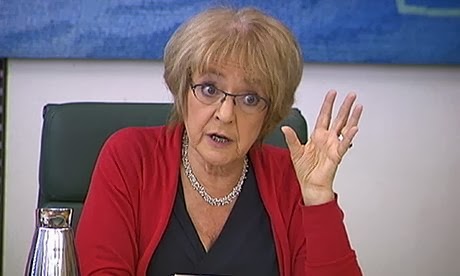
Margaret Hodge attacks 'voluntary' tax policies for rich

Hodge has led the cross-party committee through a wide-ranging investigation into how multinational firms pay UK tax
The chair of parliament's public accounts committee, Margaret Hodge, has delivered her most outspoken attack to date on the coalition's tax policies, describing the tax system for corporations and the super-rich as "increasingly voluntary".
She also criticised the "growing gap between rhetoric and reality" coming from David Cameron on tax reform.
Speaking at an event organised by tax campaigning charities in London, Hodge said: "They [ministers] believe we should engage fully in the global race to the bottom … I now believe David Cameron doesn't mean what he says when he says multinational companies should 'wake up and smell the coffee'."
Despite tough language on combating tax avoidance, the coalition government has been acknowledged among tax professionals as accelerating the pace of tax competition in a drive to lure in foreign investment. Measures such as new rules for overseas finance subsidiaries, tax breaks for groups owning patents in the UK, and the plunging corporation tax rate, have been cited by critics of Cameron's approach to tax reform.
Hodge's attack on Cameron harked back to a speech he gave at the World Economic Forum in Davos in January, shortly after the use of aggressive tax avoidance strategies at Starbucks' UK operations had been exposed by a Reuters investigation. The coffee chain had taken £3bn of sales in the UK over 14 years, but paid only £8.6m in tax.
Cameron told the audience of business leaders in the luxury Swiss resort: "When some businesses aren't seen to pay their taxes, that's corrosive to the public trust … Some forms of avoidance have become so aggressive that I think it is right to say these are ethical issues and it is time to call for more responsibility."
In a blunt jibe at Starbucks, he urged multinationals to "wake up and smell the coffee".
Hodge has spent the last two years leading the cross-party committee of MPs through a wide-ranging investigation into how multinational firms pay UK tax. Her tough questioning of company executives, big-four accountancy partners and HMRC bosses has played a major role in keeping tax reform high on the political agenda.
After firms such as Google and Amazon were subjected to a barrage of angry questioning from Hodge's committee, George Osborne responded a year ago by issuing a joint statement with his German counterpart Wolfgang Schäuble, calling for urgent reform of the international tax rules. "Some multinational businesses are able to shift the taxation of their profits away from the jurisdictions where they are being generated, thus minimising their tax payments compared to smaller, less international companies," they said. "We want global companies to pay those taxes."
Since then, however, Schäuble has dramatically switched his view of Britain's commitment to shoring up the integrity of international tax regimes, attacking Osborne's "patent box" tax break. "That's no European spirit," he said. "You could get the idea they are doing it just to attract companies."
Behind the scenes, a growing number of fellow G8 nations have also become increasingly irritated at the apparent gap between Cameron's use, on the one hand, of a language of ethics on tax reform, and, on the other, what some see as begger-thy-neighbour measures to poach business activity from rival economies.
Article Source : http://www.guardian.co.uk
Azure Global’s vision is to be widely recognized as a reputed firm of financial business advisors, achieving real growth for ambitious companies and to become the first choice for F&A outsourcing for accountancy practices and businesses alike and if u want to Setup ur business in United Kingdom then  its not difficult in this modern age for more info visit our site Azure Global and join us also On Facebook

Thursday, 21 November 2013

Royal Mail float: paying bankers' deferred fees would be 'mad', MP says

Select committee chairman says paying the extra fees would reward bankers who priced the float too low
The government would be "mad" to pay more than £4m in deferred fees to the banks that advised on Royal Mail's privatisation because they undervalued the company, the chairman of a parliamentary committee said after grilling the bankers on Wednesday.
Adrian Bailey, who chairs the Business, Innovation and Skills (Bis) select committee, said paying the fees, on top of more than £12m already handed over, would reward highly paid bankers who set the float price too low at the expense of the taxpayer.
Bailey gave his judgment after the committee questioned senior staff from Goldman Sachs and UBS, the banks that led the flotation. In more than two hours of questioning, they were accused of failing at their jobs and selling the taxpayer short.
The government sold 60% of Royal Mail at 330p a share last month, valuing the company at £3.3bn. But the shares leapt 38% on their first day of trading and closed on Wednesday at 550p, giving Royal Mail a market value of £5.5bn.
Goldman, UBS and five other banks that marketed the shares have so far been paid £12.7m between them but they could get a further £4.2m if Vince Cable, the secretary of state, thinks they warrant it.
Bailey said: "The government, in view of what has happened subsequently, would be mad to give them [the money].
"It would be seen as rewarding the private sector that lost the taxpayer potentially £1bn and, in these days of austerity, I think it would be a very politically dangerous thing to do. These are professional people, who got it wrong, and they would be rewarded despite the fact they got it wrong."
The banks in the syndicate that marketed Royal Mail to investors shared fees of 0.8% of the money raised, with Goldman and UBS splitting an extra 0.1% for leading the operation. The government's independent adviser, Lazard, has been paid £1.5m with no fees deferred.
Asked whether taxpayers would be willing to accept the banks getting the extra fees, UBS's James Robertson said: "I think that is for the secretary of state to decide. It is in his gift."
MPs questioned James Robertson and Richard Cormack of Goldman Sachs alongside bankers from Citi, JP Morgan and Deutsche Bank, which missed out on advising on the float. Gert Zonneveld of Panmure Gordon, who argued that Royal Mail was undervalued before the shares started trading, also appeared.
Goldman's initial pitch, made without inside information, valued Royal Mail at up to £3.75bn and UBS's top estimate was £4.6bn. The others were more than £1bn higher with JP Morgan's the highest at £8.5bn.
The banks' job was to sound out fund managers on how much they were prepared to pay for the shares and to generate demand in a so-called book-building process. As interest increased, they moved the price to the top of their initial 260p-330p range.
The UBS and Goldman bankers defended the sale price, saying a potential US debt default and the threat of a nationwide postal strike loomed over the flotation.

Robertson admitted the government could have got a further 20p per share if it had gone above the agreed range but he said the risks were too great because it would have caused a delay and pushed long-term investors to their limit. "Momentum can evaporate and go away very quickly … when we were looking at all the risks, on balance we chose to stick to 330p. We discussed it with the Shareholder Executive [which advises on privatisations] and Lazard and they discussed it with the secretary of state."
But committee members accused the banks of failing at their job and of being duped by potential investors, who always want to pay as little as possible.
Brian Binley, a Conservative member of the committee, told the bankers: "Somebody somewhere has failed the taxpayer and cost the taxpayer in this initial instance. I just wonder whether the taxpayer has the right to wonder whether for all the money you were paid you weren't very good at your job."
The committee's attention will now turn to Cable and his minister Michael Fallon, who will appear next Wednesday with representatives from Lazard and the Shareholder Executive. In his last appearance at the committee just before the flotation, Cable dismissed the prospect of a jump in Royal Mail's share price as "froth".
Bailey said the session with the bankers was preparation for asking Cable why he priced the privatisation so low.
"I think there was a recognition [by the committee that the price has been undervalued. Did they rate their political position as being more important than the interests of the taxpayer because if it was overpriced they would have had egg on their faces?"
Article Source : http://www.guardian.co.uk
Azure Global’s vision is to be widely recognized as a reputed firm of financial business advisors, achieving real growth for ambitious companies and to become the first choice for F&A outsourcing for accountancy practices and businesses alike and if u want to Setup ur business in United Kingdom then  its not difficult in this modern age for more info visit our site Azure Global and join us also On Facebook

Tuesday, 5 November 2013

Serious Fraud Office launches inquiry into G4S and Serco overcharging claims

Investigation follows justice secretary's claims that firms overcharged on electronic tagging contracts for offenders
The Serious Fraud Office has launched a formal criminal investigation into two of the government's biggest suppliers, G4S and Serco, following claims by the justice secretary, Chris Grayling, of tens of millions of pounds of overcharging on electronic tagging contracts for offenders.
Grayling asked the SFO to look into the billing allegations in July when he told MPs that an external audit had revealed that the overcharging included billing for tracking the movements of criminals who had moved abroad, who were back in prison, who had had their tags removed and even, in a few cases, those who had died.
The justice secretary said that in some cases the bills had continued to be presented years after active monitoring had stopped.
Whitehall sources have confirmed that the central allegation in the case revolves around charges for 3,000 phantom offenders. The justice ministry was being billed by the two companies for the tagging of 18,000 offenders a day under the £700m contract when only 15,000 were actually being monitored.
G4S said it would co-operate with the investigation and had been notified by the SFO director, David Green, that it would cover "the contract for the provision of electronic monitoring services which commenced in 2005 as amended and extended until the present day".
In July Grayling asked the SFO to look into the situation after G4S refused to co-operate with a justice ministry internal forensic audit to establish whether any dishonesty had taken place. The decision to refer Serco, which did co-operate with the MoJ audit, to the SFO was taken in September.
In July Serco said senior management had not been aware of the discrepancies but they did not believe anything dishonest had taken place. The company agreed with the MoJ that if the forensic audit showed dishonesty had taken place they would jointly call in the SFO.
The pattern of overcharging was revealed by a PricewaterhouseCoopers external audit commissioned by Grayling in May after billing discrepancies were discovered during the re-tendering process.
Under the contracts, more than 20,000 offenders are monitored on electronic tags at any one time. They are a key element in the criminal justice system's menu of community punishments as they are used to enforce curfews for prisoners on early release as well as some court orders.
In a small number of cases they have been used to track the movements of terror suspects and paedophiles. Last week prosecutions were halted against three terror suspects accused of tampering with their G4S-supplied GPS tags amid claims of faults with the tags and their straps.
The two companies are among the government's biggest suppliers. Both have already agreed to withdraw from bidding for the £3bn next-generation tagging contract.
The Cabinet Office has also been reviewing the 28 contracts that the two companies currently hold with the government worth a total of £9bn, including the management of the atomic weapons establishment at Aldermaston. Grayling has said that both companies can bid for contracts to run 70% of the probation service but will not be awarded them unless the SFO give them a clean bill of health.
Sadiq Khan, the shadow justice secretary, said the SFO decision was a major development. "In July I wrote to the SFO calling on them to investigate claims against G4S and to act swiftly to secure any possible evidence that might be needed. I hope that the time taken to launch this investigation hasn't resulted in the loss of important evidence," he said.
"With future Ministry of Justice contracts up for grabs, including more than £600m of probation contracts, the government must act swiftly and bar G4S from bidding for any more until the SFO has concluded its investigation. By failing to do so, David Cameron risks undermining public confidence in our justice system."
Article Source : http://www.guardian.co.uk
Azure Global’s vision is to be widely recognized as a reputed firm of financial business advisors, achieving real growth for ambitious companies and to become the first choice for F&A outsourcing for accountancy practices and businesses alike and if u want to Setup ur business in United Kingdom then  its not difficult in this modern age for more info visit our site Azure Global and join us also On Facebook

Monday, 28 October 2013

HMRC chiefs face grilling by MPs over lost tax

Officials will be urged to prosecute more evaders as giant firms' schemes left out of avoidance figures
The credibility of HM Revenue and Customs' £35bn estimate of Britain's "tax gap" – the amount lost from the public purse to evasion, avoidance and payment failure – is expected to face fierce challenge when three top officials appear before a parliamentary committee on Monday.
MPs on the public accounts committee, chaired by Margaret Hodge, are expected to ask why the complex tax policies of Google, Amazon and Starbucks do not register in official avoidance figures. When HMRC this month published its tax gap figures for 2012, it said the amount lost to what it narrowly defines as tax avoidance was just £4bn, the same amount as the previous year.
Other factors – including £5.1bn lost to evasion, £5.4bn to the hidden economy and £4.3bn to companies and individuals failing to take reasonable care – were all more costly than avoidance, HMRC claimed.
Tax fairness campaigners have criticised HMRC for excluding from its tax gap calculations what many, including the prime minister and chancellor, have described as tax abuse. MPs investigating the complex world of big-business tax engineering have accused HMRC of getting too close to large companies and tax advisers, and of failing to crack down on what they describe as abuses. The politicians are expected to ask why a more robust approach is not being taken towards multinationals, particularly internet and technology groups, whose business models frequently lend themselves to aggressive tax engineering. Other European countries, led by France, have raided offices of high-profile corporations including Google, Microsoft and LinkedIn.
This month the former energy secretary Chris Huhne attacked HMRC for its willingness to reach settlements with suspected tax evaders holding tens of thousands in Swiss bank accounts. He also said tax evaders using Liechtenstein had been offered "amnesty-lite" deals. In both cases, HMRC's approach contrasted with that of authorities in France and Germany.
In the past week there have also been reports of companies, including many British energy groups, exploiting tax-haven stock exchanges to qualify for a UK tax break known as the "quoted eurobond exemption". Ministers' plans to close loopholes in this area last year were ditched after an HMRC consultation.
On Sunday Chris Leslie, shadow chief secretary to the Treasury, said: "David Cameron needs to explain why he decided not to close down this tax loophole, which we know some energy companies are using to avoid millions in tax."
Among the officials appearing before MPs will be Edward Troup, HMRC's senior tax professional, responsible for overseeing settlements in sensitive tax disputes.
Alongside him will be Jim Harra, head of business tax, who is expected to repeat his insistence that HMRC is doing a good job and any loopholes exploited by the likes of Google and Amazon are a matter for international bodies such as the G20 and OECD, not for HMRC.
Jennie Granger, head of enforcement and compliance, is expected to face tough questioning on why HMRC agreed settlements with tax evaders rather than prosecuting. MPs will also want to know why more cannot be done to extract financial penalties from big accountancy firms shown to have marketed tax schemes
Granger is expected to maintain that HMRC's efforts to tackle marketed tax avoidance schemes continue to bear fruit, pointing to a win rate of eight out of 10 tax avoidance cases in 2012-13, producing more than £1bn in tax receipts.
That view is in contrast to the analysis of Amyas Morse, comptroller and auditor general of the National Audit, who noted that there were 41,000 open case relating to marketed avoidance schemes, suggesting that HMRC had "yet to demonstrate whether it could successfully manage this number down".
Granger has already defended HMRC's record. In July she said: "Compared to other countries that publish tax gap estimates, and allowing for differences in methodologies, we believe that the UK's tax gap is towards the lower end of the range."
She insists her tax inspectors are well resourced and able to "man mark" the largest firms operating in the UK. She claimed they brought in £20.7bn of revenues last year, a record total, with £8bn coming from large business.
Article Source : http://www.guardian.co.uk
Azure Global’s vision is to be widely recognized as a reputed firm of financial business advisors, achieving real growth for ambitious companies and to become the first choice for F&A outsourcing for accountancy practices and businesses alike and if u want to Setup ur business in United Kingdom then  its not difficult in this modern age for more info visit our site Azure Global and join us also On Facebook
Wednesday, 23 October 2013

Royal Mail shares: hedge fund takes biggest private stake

TCI's 5.8% slice of Royal Mail shares fuels criticism of Vince Cable over 'fire sale' as Labour says small investors let down
A hedge fund known for its aggressive investment strategy has become the largest private shareholder in Royal Mail, re-igniting anger overVince Cable's controversial privatisation of the postal service.
The Children's Investment Fund owns a 5.8% stake in the 500-year-old postal service, making it the largest shareholder behind the government, which has a 38% stake. TCI is controlled by publicity-shy Chris Hohn, who pressed for the sale of ABN Amro, which ended in the Dutch bank's disastrous takeover by the Royal Bank of Scotland, and has been dubbed a "locust" in Germany for its investment style.
TCI's stake in Royal Mail came to light under stock market rules obliging investors to report holdings greater than 5%, and was seized on by government critics who argue that the business secretary failed small investors by selling the shares off to "big money" in the City and failing to live up to his promise to sell them to long-term investors.
TCI revealed that it owns 58.1m shares, on a day when the shares rose to 499p, slightly down on last week but still 50% higher than the 330p the shares were sold at.
Hohn, the Surrey-born chief executive of TCI, is also among the UK's most generous philanthropists and first came to prominence in 2005 after he ousted the chief executive of Deutsche Börse, Werner Seifert, ending his bid to take over the London Stock Exchange. Seifert retaliated by branding TCI partners and its US equivalents "locusts".
The bulk of the controversial hedge fund's stake in Royal Mail is likely to have been bought on the stock market rather than directly from the government, but it may still raise hackles among trade unionists who recently voted for a nationwide 24-hour strike next month. It has also reignited criticism from Labour that Royal Mail was sold on the cheap.
Ian Murray, the shadow minister for trade and investment, argued that small investors had been failed by the government's "fire sale".
"We have seen small investors losing out while the vast majority of shares sold have gone to big-money investors in the City," he said. "Vince Cable claimed that the sale would prioritise long-term investors but serious questions will be asked on whether this is the case, not least given the huge volume of trades in Royal Mail shares which we have seen in the first days of trading, running into hundreds of millions."
He added: "This is on top of real concerns that taxpayers have been left short-changed to the tune of hundreds of millions of pounds at a time when families across Britain are facing a cost of living crisis."
Cable told a committee of MPs earlier this month the government was in "a position to ensure that we do get the right kind of investor community". He said: "We are talking about pension funds and insurance companies that hold the savings of millions of people, and we have been very clear that that is the kind of relationship we want to have, that is long-termism."
A spokesman at the business department referred to these comments and said the government was not disappointed with a hedge fund owner, adding: "It is not a matter for us, it is a matter for the company."
TCI and Royal Mail declined to comment.
Hedge funds have been among the city institutions and retail investors scrambling for a slice of Royal Mail, in part because they believe modernisation of the postal service could happen faster than planned.
David Buik, a market commentator at Panmure Gordon, described Hohn as an extremely shrewd businessman. "My guess is that he thinks it is a probably a very good company. I suspect he thinks it is undervalued – I suspect he has bought his stake in it for that reason." Neither will it have escaped his attention that Royal Mail is a plum takeover target, Buik added.
"If things don't work out on an independent basis, it would look very cosy in the portfolio of UPS or Deutsche Post."
TCI has grown into one of the world's largest hedge funds since its creation in 2003, and currently has $11bn in assets under management.
In recent months it has been buying into companies with corporate governance concerns, such as Japan Tobacco and Rupert Murdoch's News Corp in the wake of the phone hacking scandal. Since News Corp was split, TCI now owns a stake in Twentieth Century Fox.
Article Source : http://www.guardian.co.uk
Azure Global’s vision is to be widely recognized as a reputed firm of financial business advisors, achieving real growth for ambitious companies and to become the first choice for F&A outsourcing for accountancy practices and businesses alike and if u want to Setup ur business in United Kingdom then  its not difficult in this modern age for more info visit our site Azure Global and join us also On Facebook

Thursday, 12 September 2013

Lloyds must help TSB, Office of Fair Trading says

Lloyds Banking Group now required to bolster TSB's profitability by £50m a year in its first four years while giving it another £40m
Lloyds Banking Group has been ordered to help the 631-strong TSB branch network become more profitable under a series of measures set out by the Office of Fair Trading to make the offshoot a stronger high street competitor.
The move will be seen as clearing the way for government to kickstart the sale of its stake in 39%-taxpayer owned Lloyds Banking Group, which was first signalled by chancellor George Osborne in his Mansion House speech in June.
But the OFT's verdict is a frustration for Lloyds which just two days ago launched TSB as a new brand with much fanfare. It will now be required to bolster TSB's profitability by £50m a year in its first four years while giving it another £40m. But Lloyds will be relieved that is not being forced to include more branches in the spun-off TSB, which is likely to be floated on the stock market next year.
The announcement by the OFT follows an analysis commissioned by Osborne in June of whether the sale of the TSB branches as well as the 315 outlets by Royal Bank of Scotland – ordered by Brussels as a condition of the 2008 taxpayer bailouts – will be enough to increase competition on the high street.
The OFT concludes that the RBS sell-off, codenamed Rainbow, does not need alteration. A separate analysis of splitting RBS into a good and bad bank, also commissioned by Osborne, is ongoing. Business secretary Vince Cable said: "We must not forget the potential implications of a 'good bank/bad bank' split of RBS".
The competition body acknowledges that asking Lloyds to put more branches in to the TSB network could risk "incurring further delay and additional sunk costs" but wants steps to be taken to ensure that the TSB offshoot attains a 4.6% share of the current account market. As currently constructed, the OFT estimates TSB's current account market share is between 4% and 4.5%.
The announcement by the OFT came as a top Bank of England official attempted to justify his claim that bad lending by the Britannia building society was the cause of the £1.5bn capital hole in the Co-operative Bank, which merged with the mutual lender in 2008.
Andrew Bailey, deputy governor of the Bank of England, wrote to the Treasury select committee to set out the cause of nearly £1bn of losses on loans at the Co-op.
Bailey provided the analysis of the Co-op's losses following evidence given to the committee last week by Neville Richardson, the former head of Britannia which merged with Co-op in 2008. Richardson, who ran the combined entity until 2011, told MPs that he had left the organisation with "no issues" and insisted that Britannia's loan book was well managed and in line with other lenders.
In a letter obtained by the BBC, Bailey tells the committee's chairman Andrew Tyrie that some 75% of the £970m of bad loan losses at the Co-op between the beginning of January 2012 and the middle of 2013 were in the bank's non-core book, which in turn is made up of between 85% and 90% of former Britannia loans in 2013 and around 75% in 2012. Of the £970m, £288m were from the core lending book and £682m from the non-core book.
Article Source : http://www.guardian.co.uk
Azure Global’s vision is to be widely recognized as a reputed firm of financial business advisors, achieving real growth for ambitious companies and to become the first choice for F&A outsourcing for accountancy practices and businesses alike and if u want to Setup ur business in United Kingdom then  its not difficult in this modern age for more info visit our site Azure Global and join us also On Facebook

Monday, 2 September 2013

Agency workers paid up to £135 a week less for same job, says TUC

Agency workers are being paid up to £135 a week less than permanent staff for doing the same job, despite EU rules saying they are entitled to equal pay, claims the TUC.
The union body is to launch a formal complaint on Monday against the government for failing to enforce European rules that are meant to guarantee equal treatment for temporary staff.
UK regulations implementing the EU's temporary agency workers directive entitle workers drafted in through agencies to the same pay and conditions as their permanent colleagues after 12 weeks. But the TUC says a widely used loophole means up to one in six agency workers are missing out.
The TUC general secretary, Frances O'Grady, said: "The recent agency worker regulations are being undermined by a growing number of employers who are putting staff on contracts that deny them equal pay. Most people would be appalled if the person working next to them was paid more for doing the same job, and yet agency workers on these contracts can still be treated unfairly."
The TUC has become increasingly frustrated about the growing use of the loophole known as the Swedish derogation, which allows agency workers placed with companies to be paid less than direct employees, provided the agency agrees to continue paying them for at least four weeks at times when it is unable to find them work.
On Monday, it will to lodge a formal complaint against the government with the European commission in Brussels, saying the UK is failing to protect temporary workers properly in the way it has implemented the directive.
Billy Hayes, the general secretary of the Communication Workers Union, said: "Some of the lowest-paid workers in the UK are being cheated out of their rights to equal pay by cynical employers intent on keeping their wages low."
He added these "payment between assignment" contracts can often be even worse for workers than the much-criticised zero-hours contracts, which offer no guarantee of regular work.
"The whole point of the 2011 agency regulations was to bring the principle of equal treatment, including equal pay, into UK law. But the introduction of new contracts means many agency workers are signing away their rights to equal pay – which for most people is the most important element of the regulations. The irony here is that if you're on a zero-hours contract you're actually better off because you qualify for equal pay after 12 weeks," he said.
The business secretary, Vince Cable, ordered an investigation into zero-hours contracts earlier this year, and the Labour leader, Ed Miliband, has met business leaders to discuss the issue.
Zero-hours contracts have become increasingly controversial, with some firms, including retailer Sports Direct, employing up to 90% of their workforce in this way, with no sick pay or holiday pay.
But growing use of the Swedish derogation since the agency workers regulations were introduced in 2011 suggests some employers have been looking for other ways to try to cut the cost of hiring staff.
TUC research has found that call centres, food production companies and logistics firms are making widespread use of the loophole, and the Recruitment and Employment Confederation estimates that one in six agency workers are on such a contract.
The derogation was only introduced because Sweden already offered better protection for its workers than the directive provides. Countries implementing the agency workers directive promised to prevent employers abusing the opt-out.
O'Grady said: "Swedish derogation contracts are just one more example of a new and growing type of employment that offers no job security, poor career progression and often low pay."
The TUC has argued that while unemployment is falling, the headline statistics disguise the many thousands of workers who are "underemployed" – working fewer hours than they would like – or trapped in poorly-paid jobs.
Robert Halfon, the Conservative MP for Harlow, recently raised concerns about the Swedish derogation, suggesting supermarket group Tesco had been able to use it to hire agency workers on low pay.
Article Source : http://www.guardian.co.uk
Azure Global’s vision is to be widely recognized as a reputed firm of financial business advisors, achieving real growth for ambitious companies and to become the first choice for F&A outsourcing for accountancy practices and businesses alike and if u want to Setup ur business in United Kingdom then  its not difficult in this modern age for more info visit our site Azure Global and join us also On Facebook

Sunday, 18 August 2013

Vodafone in multimillion tax deal over Irish office

Previously unreported settlement with HMRC came in wake of dispute over tax paid by subsidiary
Vodafone made a previously unreported multimillion-pound settlement with HM Revenue & Customs in the wake of a dispute over the tax paid by an Irish subsidiary created to collect royalty payments for using its brand.
The UK-based mobile phone group used an Irish subsidiary, which employed no staff between 2002 and 2007, to collect hundreds of millions of pounds a year in royalty payments from operating companies and joint ventures around the world. By 2007, Vodafone Ireland Marketing Ltd, a company registered to an industrial estate in the Dublin suburb of Leopardstown, was reporting a turnover of €380m (£320m) a year.
During a four-year period, these royalty payments, collected from most countries except the UK and Italy, have helped Vodafone send more than €1bn worth of dividends to the low tax jurisdiction of Luxembourg from Dublin. The dividends, which include a final payment of €142m due to be delivered this year, came from profits made after taking advantage of Ireland's low corporation tax rates.
In an arrangement which echoes those made by Apple in Ireland, Vodafone moved senior marketing managers to Dublin to protect global royalty revenues from UK taxation, and trigger a lower Irish corporation tax bill from 25% to 12.5% of profits. This was significantly lower than the UK corporation tax rate, which between 2008 and 2010 was 28% of profits.
Accounts filed in Dublin show that in 2009, HMRC settled a dispute with Vodafone over its Irish tax returns. The overall size of the settlement has not been revealed, but it involved Vodafone reclaiming €67m from the Irish government in tax that should have been paid in the UK. Vodafone, the world's second largest mobile phone company by revenue, has paid no corporation tax in Britain for two successive years, despite paying £2.6bn in international taxes in 2012.
The company confirmed its Irish settlement had never been separately disclosed in its annual reports, and was not connected to a £1.25bn payment to HM Revenue and Customs in 2010 to settle a much publicised dispute over the use of a Luxembourg subsidiary. A spokesman for HMRC refused to confirm whether any settlement over Vodafone's Irish tax affairs had been made, saying it was prevented by law from discussing the affairs of individual taxpayers.
Vodafone went to great lengths to protect its Irish income, eventually relocating a section of its global marketing team from the UK to Dublin in 2007. The transferred staff were responsible for handling such high profile sponsorships as the operator's longstanding deal with Formula 1 and the Champions League.
The Irish brand subsidiary was wound down after the staff were brought back to the UK in 2011. According to a company spokesman the unit's activities have transferred to a UK company which pays all its profits into the British plc and is taxed under UK rules.
The disclosure comes as MPs revealed the British mobile phone group, which is under fire for its minimal corporation tax payments in this country, has emerged as the largest supplier of mobile phones to the government. More than 30 departments and public bodies, including the prime minister's office, have signed contracts worth £14m a year with Vodafone.
In a stand against tax avoidance, ministers updated laws in April to ensure companies whose tax returns have been challenged by HM Revenue & Customs on grounds of tax abuse can be disqualified from working for the government.
Vodafone strongly rejected any suggestion of tax avoidance and said there have been no allegations of wrongdoing from HMRC. The company said its disputes with the UK taxman over its tax arrangements in Ireland and Luxembourg would not block it from government contracts under current rules, but MPs argued there was a principle at stake.
By 2007, a Vodafone subsidiary registered to an industrial estate in Dublin was reporting a turnover of €380m (£320m) a year."The fact that government departments are using companies which have been challenged about the tax they owe clearly shows that current tax laws need reform," said Labour MP Pamela Nash, whose parliamentary questions helped reveal the extent of Vodafone's government work.
The rules which eventually came into force have been described by tax experts as narrow in scope, and Vodafone says they would not have applied to its HMRC settlements, even if they had been in force at the time.
"Vodafone has long been a major supplier to central UK government departments and we have always complied in full with all procurement criteria defined by government," the company said in a written statement.
"In all respects and at every point, Vodafone has conducted itself with the highest integrity and in full compliance with the law."
Vodafone's status as the dominant supplier of mobile phones to government departments was exposed by a series of parliamentary questions asked by Conservative and Labour MPs. Questions were put by Nash, by Labour MPs Dai Havard and Jenny Chapman, and Tory MPs Gary Streeter and Mike Freer.
Steve Barclay, a member of the Commons Public Accounts Committee, which has previously tackled Vodafone's tax affairs, said: "The government now needs to close any existing tax loopholes to ensure that large companies, such as Vodafone, are not legally able to avoid paying their fair share of tax. The need for swift action is particularly highlighted when it is public money that is paying for these substantial contracts with private companies."
Vodafone is the largest or only mobile supplier to a raft of departments, including the Cabinet Office, which covers David Cameron and Nick Clegg's offices, the Treasury, including HMRC, the Department for Business, Innovation and Skills, the Ministry of Defence, the Department of Health, and the Department for Work and Pensions.
Many of the contracts are based on commercial terms agreed between the Cabinet Office and Vodafone in a Memorandum of Understanding that runs from 2010 to 2014. While rival networks EE and O2 have some government work, EE is pushing for more open competition in the awarding of mobile contracts by ministries.
A Cabinet Office spokeswoman said: "Since 2010 we've radically changed the way government buys goods and services to make the most of our unique buying power.
"Last year alone these reforms saved taxpayers £800m by renegotiating contracts with our largest suppliers, of which Vodafone is one.
"We are determined to continue to increase competition and innovation amongst a range of suppliers to make sure that every option to cut waste and make savings are explored, especially when opportunities to review large-scale contracts arise."
Chief secretary to the Treasury Danny Alexander launched an overhaul of the rules around government contracts last year, saying "taxpayers' money should not be funding tax dodgers".
Article Source : http://www.guardian.co.uk
Azure Global’s vision is to be widely recognized as a reputed firm of financial business advisors, achieving real growth for ambitious companies and to become the first choice for F&A outsourcing for accountancy practices and businesses alike and if u want to Setup ur business in United Kingdom then  its not difficult in this modern age for more info visit our site Azure Global and join us also On Facebook